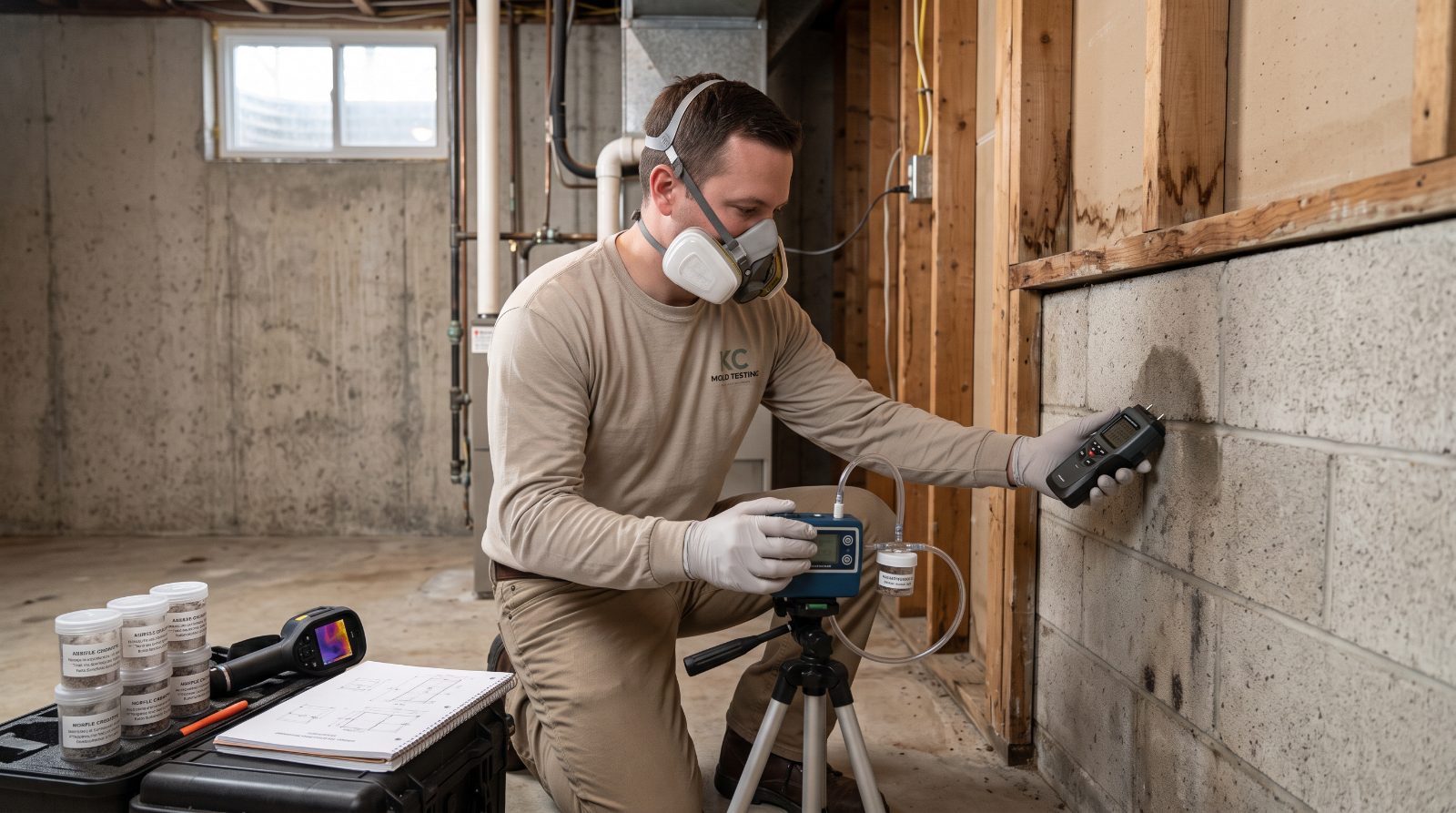
Mold Testing Kansas City is a request service. We do not do the testing ourselves. When you send in a request, we take down the details and pass them to an independent local contractor, who contacts you, gives you the estimate and does the work. That keeps things simple for you. You describe the problem once, and the person who shows up is someone who works in this area and knows how local homes are built.
We set this up because most people searching for a mold test are worried and short on time. They have a smell in the basement, a dark patch on a ceiling, or a home purchase with a deadline, and they do not know who to call or what to ask. We keep the first step easy and honest. We explain what testing is, what it is not, and what happens next, so you can make a clear decision before anyone visits your home.
More about us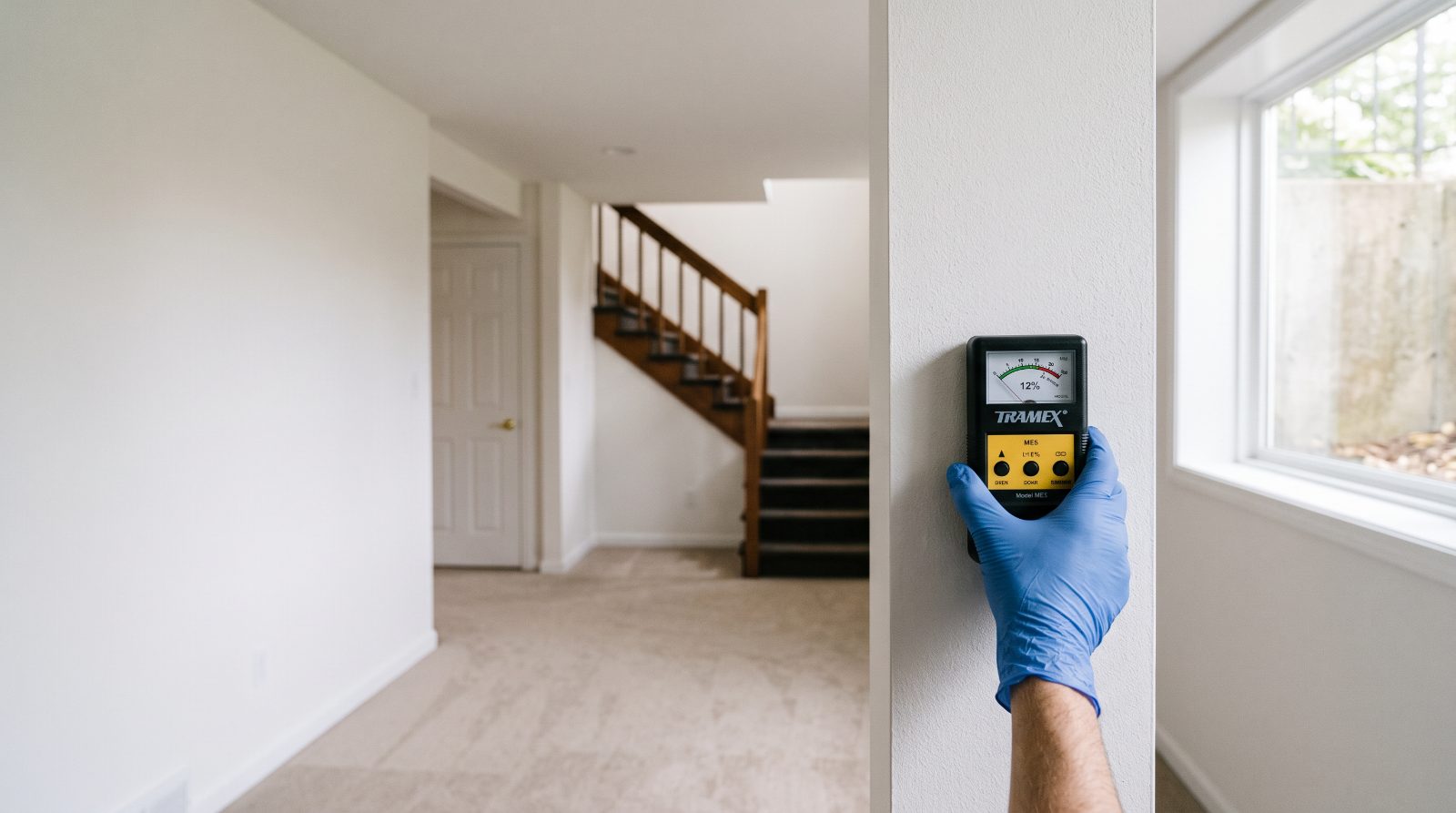

Mold rarely announces itself with anything dramatic. In most homes it starts as something small that is easy to explain away. A musty smell in the basement that comes and goes with the weather. A dark patch in a bathroom ceiling corner that returns after every cleaning. Paint that bubbles on an exterior wall after a hard rain. Any of these can mean moisture is sitting somewhere it should not be, and mold needs only three things to grow: moisture, a food source such as drywall paper or wood, and a little time.
Water events are the biggest trigger. If a spring storm pushed water through a basement wall, hail left a roof leaking, a supply line burst under a sink, or an air conditioner drain line backed up, any material that stayed damp for more than a day or two deserves a closer look. Mold can grow inside wall cavities, under flooring and above ceilings for months before anything shows on the surface. That is why a smell with no visible source is a good reason to ask for testing.
Some situations call for a test even when nothing looks wrong. Buyers often want a baseline reading before closing on an older house, and sellers sometimes want the same so questions get answered before they come up. Landlords and tenants use results to settle disagreements about what is actually in the air. Homeowners who have just finished a basement or replaced windows sometimes want confirmation that the work did not trap moisture.
Some people notice stuffy noses, itchy eyes or coughing that seems to ease when they leave the house. Those symptoms have many possible causes, and a doctor is the right person to sort them out. Testing answers a different question, which is whether mold levels inside the home are higher than they should be and where the problem seems to be concentrated.
A visible spot is not always a serious problem, and a clean looking room is not always a safe one. Testing replaces guessing with measurements. When you send your request, describe what you have noticed and where, because those details help the contractor plan the visit before arriving.
A good mold test starts with a conversation, not a sampling kit. The contractor asks what you have seen and smelled, when it started, whether there has been water damage, and which rooms bother you most. Those answers decide where to look first and how many samples make sense. A visit with no questions beforehand is a warning sign.
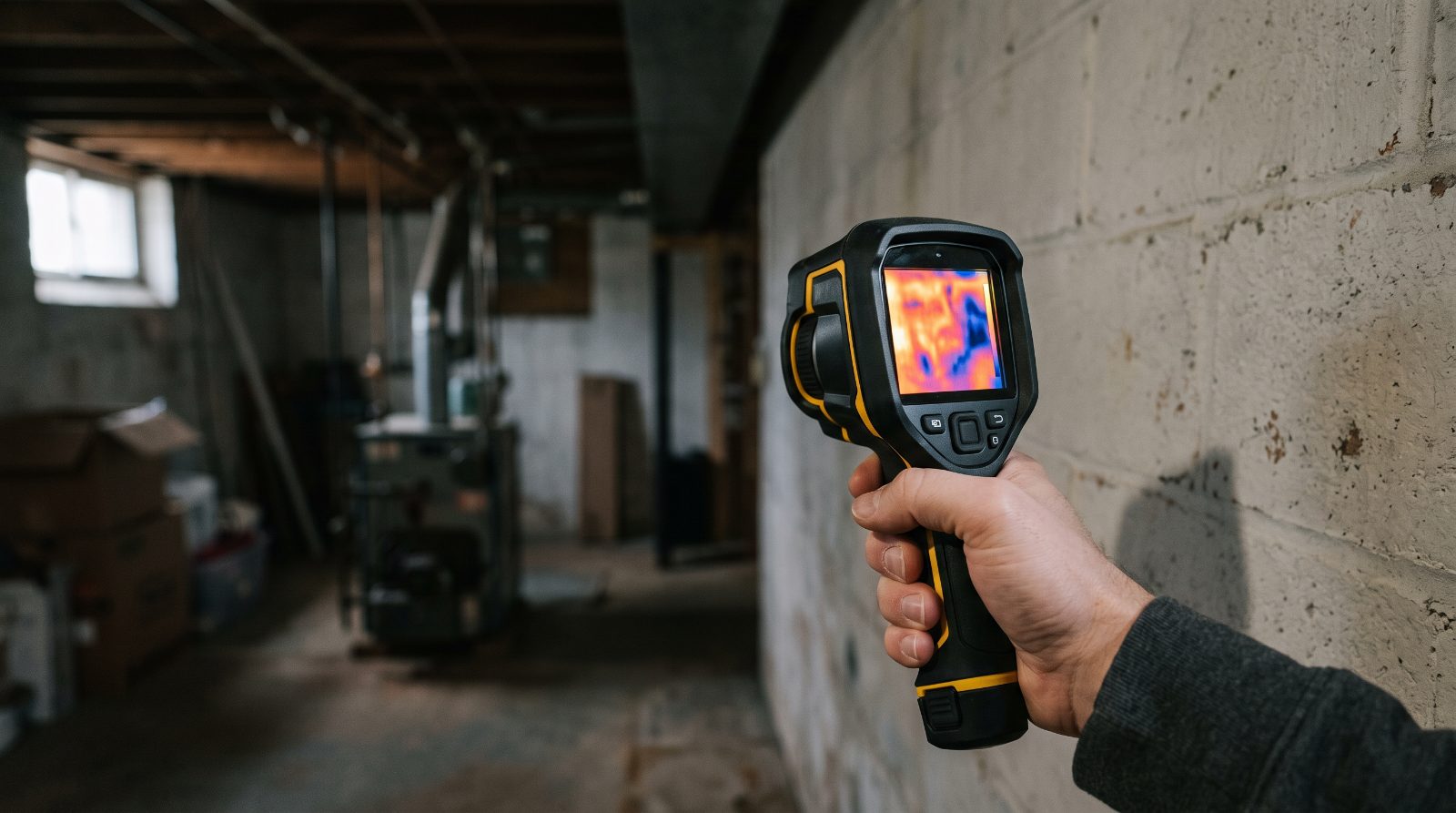
Next comes a walk through the property. The contractor looks at the basement or crawlspace, the attic, bathrooms, kitchen, laundry area, and the walls around windows, plumbing and heating and cooling equipment. They look for stains, warped materials, peeling paint, rust on fasteners, and signs of past leaks that were patched but never dried out properly. A moisture meter shows whether walls, floors and trim are damp. A thermal camera can reveal cool, wet areas behind surfaces without cutting anything open, which is useful when the smell is obvious but the source is not.
Sampling comes after the inspection, because what the contractor finds decides what to sample. Air samples are taken inside the home and outside as a comparison. Surface samples use tape or swabs on a stain or fuzzy patch. In some cases a small piece of material is collected. Each sample is labeled and sealed so the lab can match results to the exact location.
Then the samples go to a lab, where a trained analyst identifies the spores or growth under a microscope. Turnaround depends on the lab and the type of sample, and the contractor can tell you what to expect for your job.
The last step is the explanation. You should hear what was found, where moisture is getting in, and what the sensible options are. Sometimes the answer is to fix a leak and dry things out. Sometimes it is to have a remediation company clean up affected areas. Sometimes the result is reassuring and nothing needs to be done. In every case the point of the visit is to leave you knowing more than you did before.
A lab report can look intimidating at first glance. It lists spore types by name, gives counts, and often compares indoor and outdoor numbers. Once you know what it is trying to say, it becomes much easier to read.
The most important comparison is indoors versus outdoors. Mold spores are in outdoor air everywhere, all year, and some always drift inside. A healthy home usually has a similar mix of spore types to the outdoor sample, and often lower counts. A problem shows up when indoor air has much higher counts than outdoors, or contains types that are rare outside and usually signal indoor growth on damp building materials.
The type of mold matters too. Some common outdoor types, such as the ones associated with leaves and grass, are expected in small amounts indoors. Others tend to grow on wet drywall, wood and insulation, and finding them in your living space is a stronger sign of a hidden moisture problem. The contractor can explain which is which for your particular report.
It also helps to remember that an air sample is a snapshot. Counts can vary with the weather, how recently windows were opened, whether the furnace was running, and even the time of day. That is why contractors compare several locations and pair air sampling with a visual inspection and moisture readings. No single number tells the whole story, and anyone who claims a magic safe number should be questioned.
Surface samples answer a simpler question: is this stain mold, and if so what kind? Plenty of dark marks turn out to be dirt, soot or old water stains, which is useful to know before anyone spends money on cleanup.
If a result confuses you, ask the contractor to go through it line by line. A good report names the locations tested, shows the lab findings, and ends with a clear summary. If it only offers a number and a recommendation to buy more services, ask for more detail before agreeing to anything.
Kansas City weather puts houses through a lot. Summers are hot and humid, which means air conditioners run for months and produce a steady stream of condensation. Winters bring hard freezes, and the swings between them make foundations expand and contract. Over time that movement opens hairline cracks that let water seep into basements after heavy rain.
Much of the metro also sits on clay-heavy soil. Clay holds water and swells when it is wet, which presses moisture against foundation walls instead of letting it drain away. Homes with poorly angled yards, short downspouts or clogged gutters are especially exposed. A basement that stayed dry for years can start to leak after a wet spring because the soil around it has been saturated for weeks.
Housing age matters as well. Many neighborhoods north and south of the river have homes from the mid-twentieth century with original basements, older plumbing, and finished lower levels added decades later. Paneling, carpet over slab and drop ceilings can hide moisture for a long time. Older roofs also take a beating from hail, and a small leak above a ceiling can feed growth in insulation long before a stain appears.
Newer houses have their own risks. Modern construction is much tighter than older building, which saves energy but can trap humidity if bathroom fans, dryer vents and ventilation are not working as they should. Rapid construction and rain delays can leave framing damp when it is closed in.
The practical lesson is that moisture control matters more than almost anything else. Mold cannot grow without water, so the real fix is finding and stopping the source. That is why a good test includes a moisture inspection, not just air samples, and why the contractor should talk to you about gutters, grading, ventilation and drainage as part of the visit.
People often ask what mold testing costs before they know what actually affects the price. The honest answer is that it depends on the home and the questions you need answered, so the contractor gives the estimate after hearing the details. Knowing the main factors helps you read that estimate and compare it with others.
The size and layout of the home is the first factor. A small ranch with one basement takes less time to inspect than a large house with several levels, a crawlspace and a finished attic. More square footage and more rooms usually mean more areas to check and more samples to collect.
The number and type of samples come next. Air samples, surface samples and bulk samples are each processed differently at the lab. A contractor may suggest a few samples for a single concern, or a larger set if the problem is spread through the house. Be cautious about both extremes. Too few samples can miss the problem, while a long list of unnecessary ones adds cost without adding answers.
Access also plays a role. Tight crawlspaces, low attics, finished walls and furniture that needs moving all take extra time. If the contractor needs to open a small section of wall or use a camera to look inside a cavity, that can change the scope.
Lab turnaround matters too. Standard processing is usually enough, but if you are in the middle of a real estate deadline you may want faster results, which can change the estimate.
Finally, the kind of report you need makes a difference. A basic summary for your own peace of mind is different from a detailed written report meant for a buyer, seller, landlord or insurer. A follow-up test after cleanup, to confirm the work was effective, is a separate visit.
When you receive an estimate, ask what is included, how many samples it covers, whether the written report and lab fees are part of it, and what happens if the first results call for more testing. A clear answer to those questions is a good sign.
Choosing who comes into your home to test for mold is worth a few minutes of thought. The market includes careful professionals and a fair number of people who treat every house as a sales opportunity. A few simple questions help you tell them apart.
Start by asking how they separate testing from cleanup. Some contractors do both, which is not automatically a problem, but it is fair to ask how they keep the testing honest. A contractor who recommends expensive removal after every test deserves a second look. Many homeowners prefer that the person doing the testing has no financial interest in the cleanup.
Ask what they will actually do. A solid answer includes an inspection, moisture readings, a plan for where to sample, outdoor comparison samples, and a lab analysis. If the entire plan is to set out a single petri dish or swab a wall and give a quick verdict, keep looking. Home test kits and single samples rarely give a reliable picture.
Ask about the report. You should receive something written that names the locations sampled, the findings, and the recommended next steps in plain language. You should also be able to call and ask questions afterward.
Pay attention to how they talk. Good contractors explain that mold is common, that the goal is to find moisture and decide what is reasonable, and that not every spot needs a dramatic response. Be wary of scare tactics, pressure to decide on the spot, or claims that every home has a serious problem.
Finally, ask about insurance and any training the contractor holds, and ask for the estimate in writing. You do not need to take anyone's word for it. When you send us a request, we pass it to an independent local contractor and you decide whether to go ahead after you have heard the estimate, so there is room to ask all of these questions first.
Mold Testing Kansas City does not do the mold testing work itself. When you call or send the form, we pass your request to an independent local contractor who covers your part of Kansas City. That contractor contacts you, gives you the estimate and does the work.
See what happens after you call